



Ever listen to Loveline? Well, here's an episode with a 24-year-old Korean American guy who's never been kissed. They're offering free concert tickets to any girl who'll come in and take a chance. The girls get their tickets, and "David" gets to pick one of them for his first smack. Trouble is... no volunteers. Combining personal dating stories and the hypnotic imagery of multi-colored koi, Sweet Or Spicy? explores Hapa and Asian American male sexuality in popular culture.
Autobiography
Swimming in Air, 2006
Recently I found myself rising from a forced landing on the floor after being catapulted into the air by an exercise machine and bouncing off the dresser. Through raccoon eyes, the effect of falling on my face, I squinted into the fog-filled room of my present, stumbling about apprehensively, my long-term memory scrambled and short-term memory severely inhibited. My once reliable body and memory were teetering on the brink of self-betrayal.
Divino explains how he got introduced to video. “Filming is my profession; that’s what I was born to do... not for the work with the axe. I wasn’t born to plant. I already said this to my wife.” Today, Divino dominates the language of video and its filming and editing techniques. He also talks about working in partnership with his community.
Directed by Divino Tserewahu; edited by Tutu Nunes.
In Portuguese with English subtitles.
The Popular Touch, 2018
Work, film, work, film, work – day to day – week to week. This is a home movie domestic comedy experimental film drama. Autobiography too. It’s also part four of an ever-growing trilogy.
Their Houses, 2011
Filmmaker Cam Archer examines and explores his ordinary, suburban neighborhood in search of hidden truths, new narratives and a better understanding of his fading, creative self. Combining heavily degraded video with personal photographs and real life neighbors, Archer re-imagines the concept of 'home video'. In an attempt to distance himself from his subjects, actress Jena Malone narrates the piece as Archer in the first person.
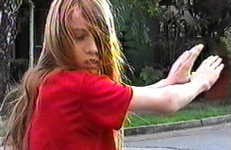
The___________World, 2021
A personal essay about connection and disconnection, in and through different realities.
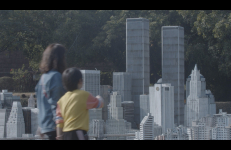
This Is Not Beirut is a personal project that examines the use and production of images and representations of Lebanon and Beirut, both in the West and in Lebanon itself. It also records Salloum’s interactions and experiences while working in Lebanon, focusing on this representational process by a Westernized, foreign-born Lebanese mediator with cultural connections to and baggage from both the West and Lebanon.
This Was Home, 2016
This Was Home is comprised of three channels, which present three generations of the artist’s family. On one screen Levy presents her maternal grandfather, Karl Ribstein, another shows her father, Yossi Levy, and the third presents the artist herself. Levy documented each of these protagonists on a journey back to their childhood city and to the home where they grew up, which they had not revisited since having to leave it in their childhood.
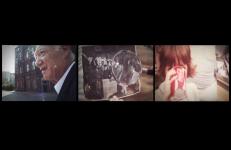
Time Passes, 1998
Using a Super-8 camera, Henricks employs time-lapse photography to document the interior and exterior of his apartment. Inspired by the work of Virginia Woolf, Time Passes uses writing as a metaphor for notions of temporality and impermanence.
This title is also available on Nelson Henricks Videoworks: Volume 2.

La Tombola (Raffle), 2001
“Take back the airwaves: Mexico’s video art doyenne Ximena Cuevas books herself onto the tabloid talk show Tombola (Raffle), toying at first with whimsical deconstruction until she turns the whole affair on its head by seizing the televisual flow itself.”
Tomboychik, 1993
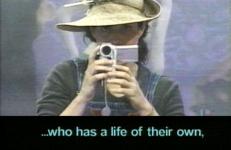
A series of intimate video-8 vignettes depicting the fierce love between Malverna and Sandi, 88 and 22, grandmother and grandson. The two playmates dress up drag-esque for this moving portrait of a woman’s lifetime struggle with gender and sexuality. Since Malverna's death, Tomboychik has become a living memorial to the intensity of her spirit.
TREYF, 1998
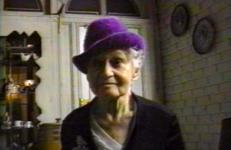
TREYF “unkosher” in Yiddish— is an unorthodox documentary by and about two Jewish lesbians who met and fell in love at a Passover “seder”. With personal narration, real and imagined educational films, and haunting imagery, filmmakers Alisa Lebow and Cynthia Madansky examine the Jewish identity of their upbringings and its impact on their lives.

TREYF, 1998
TREYF “unkosher” in Yiddish— is an unorthodox documentary by and about two Jewish lesbians who met and fell in love at a Passover “seder”. With personal narration, real and imagined educational films, and haunting imagery, filmmakers Alisa Lebow and Cynthia Madansky examine the Jewish identity of their upbringings and its impact on their lives.
Turn-On, 1974
Acconci again confronts both the viewer’s and his own expectations of his performance, saying, "I've waited for the perfect time, for the perfect piece, I'm tired of waiting... but no, you want me to have something ready for you, something prepared." Acconci addresses the artist's perpetual wait for both inspiration and appreciation. He pulls apart the relationship of the artist to the audience, which for Acconci constitutes a mixture of independence and co-dependence, relying on the viewer to both validate and motivate his work.
A hug/punch eulogy for all things impossible now. Vague Images is a sketch book of images and sounds from the year wrapped around a trip out to Loomis, South Dakota to find the abandoned farm where my grandfather grew up. At the same time the film is a travelogue of my frustrations and understandings of gay sexuality. The two are connected.
Vever (for Barbara), 2019
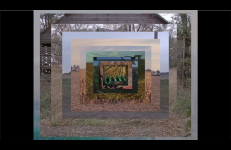
A cross-generational binding of three filmmakers seeking alternative possibilities to the power structures they are inherently part of. Each woman extends her reach to a subject she is outside of. Vever grew out of the abandoned film projects of Maya Deren and Barbara Hammer. Shot at the furthest point of a motorcycle trip Hammer took to Guatemala in 1975, and laced through with Deren’s reflections of failure, encounter and initiation in 1950s Haiti.
A vever is a symbolic drawing used in Haitian Voodoo to invoke Loa, or god.
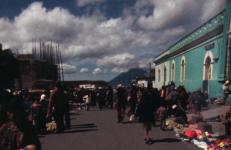
Vicki in 3:30, 1990
Using the fictional character of “Vicki” as a foil, this confessional boy story confronts sexual politics head on.
“(Fulbeck’s) narrative runs around like a chicken with its head cut off, deconstructing everything in its path — dating, gender roles, stereotypes, and the whole notion of sexual conquest. We end up wondering who the ‘winner’ really is” — Keith Fung, Momentum
This title is only available on Kip Fulbeck Selected Videos: Volume Two.
Voice: off, 2003
Voice: off is the autobiography of a forgotten man. Brain damaged, body violated, emotions crushed, Gerry who rarely spoke has now lost the power of speech. The video camera is his prosthesis and he borrows the memories of people who no longer need them. How can this be a comedy? It is. "Donigan Cumming looks at the violence of time that damages the body and exhausts memories. For the main character in Voice: off, Gerald, the illness is incurable. Two cancers are at work, one of which is attacking his throat.
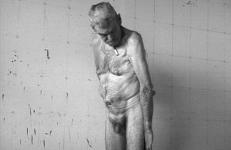
In the fall of 1986, Richard Fung made his first visit to his father’s birthplace, a village in southern Guangdong, China. This experimental documentary examines the way children of immigrants relate to the land of their parents, and focuses on the ongoing subjective construction of history and memory. The Way to My Father's Village juxtaposes the son’s search for his own historical roots, and his father’s avoidance of his cultural heritage.
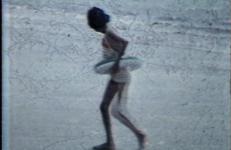
West Fingerboard Road, 2009
I could not remember anything about my childhood before the age of twelve. I made a decision to remember. West Fingerboard Road relays how I remembered my forgotten childhood memories, and references the writings of philosopher Gilles Deleuze that echo my ideas on memory and the process of remembering.
-- Susan Youssef
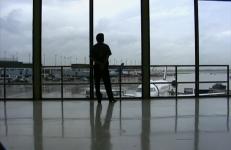
“[Segalove] pursues her self-analysis via the popular culture and TV addiction of her youth: seeing JFK shot on TV, falling in love with the TV repairman, being glued to the tube while suffering from the requisite bout of mononucleosis, and associating the memory of watching her parents kiss with the soundtrack of Dragnet.” —Marita Sturken, “Revising Romance: New Feminist Video,” Art Journal 45 (Fall 1985)
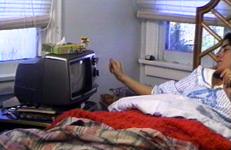
Winter at Last, 2005
Two video letters made to communicate the artists longing for her friends, and produced with the same images from her daily life in Israel. The first is addressed to Jacqueline, the artist’s Swiss friend in Zurich, and the second to Abla, her Palestinian friend in Nablus.
This title is only available on Radical Closure.
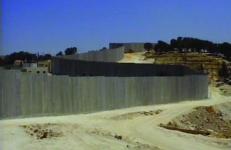
Women's Movements, 1989
In Barbier’s meditative journey through India, she deconstructs the myth of the objective documentary by using textual commentary and off-camera remarks to address the problematic relationship of observer to observed. Framing the images through the artist’s subjective and distinctly female point of view, she explores images of women working, sweeping, cooking, and tending children in direct juxtaposition to men who sit, relax, and observe the spectacle.
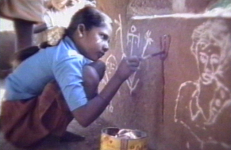
Ming Wong: An Interview, 2015
Ming Wong creates videos that explore performance and issues of race and gender. Born in Singapore of Chinese heritage, and now based in Berlin, his work examines cross-cultural experiences by appropriating scenes of iconic world cinema. Wong casts himself anachronistically as the star, critically exposing the otherness of the relationship of media and world history.
You Are Here, 2009
Based on the filmmaker's autobiography, You Are Here examines the search for home within our era of transnational displacement. As the son of Italian immigrants, the filmmaker examines notions of home and belonging within the context of his ethnic origins, but also extends this in relation to his identity as a gay man. The film chronicles his trajectory from his familial home in Italy, to his native Canada and beyond, and weaves a compelling portrait shaped by memory and the realities of the present.