


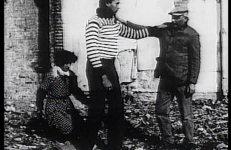
Perils is a homage to silent film—the clash of ambiguous innocence and unsophisticated villainy—dramatizing the theatrical postures of melodrama to confront and examine our ideas of romance, action, and drama. Child says, “I had long conceived of a film composed only of reaction shots in which all causality was erased. What would be left would be the resonant voluptuous suggestions of history and the human face.” Charles Noyes and Christian Marclay constructed the sound montage from Warner Brothers cartoons and improvisations.
LGBTQ
Media artist Cyrille Phipps has been involved with numerous alternative media and lesbian activist projects, including Dyke TV and the Gay and Lesbian Emergency Media Campaign. Her video projects include Respect Is Due (1991), Black Women, Sexual Politics and the Revolution (with Not Channel Zero, 1992), Our House: Gays and Lesbians in the Hood (with Not Channel Zero, 1992), Sacred Lives, Civil Truths (with Catherine Saalfield, 1993), Dreaming Ourselves...
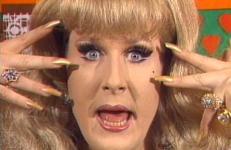
Pickle Surprise, 1989
A short, hilarious cooking mantra, featuring Sister Dimension, The "Lady" Bunny, RuPaul, David Dalrymple, Lahoma Van Zandt and Maria Ayala. "Where's the pickle? That's the surprise!"
This title is only available on Tom Rubnitz Videoworks: Sexy, Wiggy, Desserty.
A Place Called Lovely, 1991
“Nicky is seven. His parents are older and meaner.” A Place Called Lovely references the types of violence individuals find in life, from actual beatings, accidents and murders, to the more insidious violence of lies, social expectations, and betrayed faith. Benning collects images of this socially-pervasive violence from a variety of sources, tracing events from childhood: movies, tabloids, children's games (like mumbledy-peg), personal experiences, and those of others.
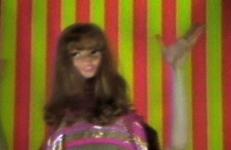
Plastic Rap with Frieda, 1983
In this early Tom Rubnitz, Barbara Lipp and Tom Koken collaboration, "Frieda" performs her rap song with a bevy of dolls as back-up singers and dancers. Features rock-bottom production values and song lyrics by Barbara Lipp and Tom Koken.
Plastic Rap with Frieda, 1983
In this early Tom Rubnitz, Barbara Lipp and Tom Koken collaboration, "Frieda" performs her rap song with a bevy of dolls as back-up singers and dancers. Features rock-bottom production values and song lyrics by Barbara Lipp and Tom Koken.
Plastic Rap with Frieda, 1983
In this early Tom Rubnitz, Barbara Lipp and Tom Koken collaboration, "Frieda" performs her rap song with a bevy of dolls as back-up singers and dancers. Features rock-bottom production values and song lyrics by Barbara Lipp and Tom Koken.
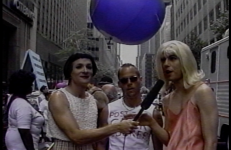
Post-Queer Pride 93, 1993
In Post Queer Pride 93, Brenda and Glennda attend the New York City Queer Pride Parade. This video marks the return of Brenda after her relocation to Florida, and Glennda interviews her about the queer scene and gay activism in the South. At the parade, they conduct interviews with queers about the postqueer movement, the leather and SM scene, feminism, and capitalism.
Prefaces, 1981
Prefaces is composed of wild sounds constructed along entropic lines, placed tensely beside bebop rhythms, and a resurfacing narrative cut from a dialogue with poet Hannah Weiner. Child tells us, “The tracks are placed in precise and asynchronous relation to images of workers, the gestures of the marketplace, colonial Africa, and abstractions, to pose questions of social force, gender relations and subordination.” This tape serves as a pre-conscious preface to the parts that follow, whose scope and image bank are more narrowly defined.
Psykho III The Musical, 1985
Psykho III The Musical is an intriguing play on the tension between “authentic” and “pop” camp. This celebration of artifice was originally written, directed, and produced by Mark Oates as a stage musical parody following the release of Psycho II in 1983, and was performed at the East Village’s most notorious nightspot — The Pyramid Club. In 1985, after a wildly successful run, Oates reached out to longtime friend and Downtown video artist Tom Rubnitz to produce a video adaptation of the stage musical.
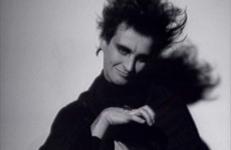
Psykho III The Musical, 1985
Psykho III The Musical is an intriguing play on the tension between “authentic” and “pop” camp. This celebration of artifice was originally written, directed, and produced by Mark Oates as a stage musical parody following the release of Psycho II in 1983, and was performed at the East Village’s most notorious nightspot — The Pyramid Club. In 1985, after a wildly successful run, Oates reached out to longtime friend and Downtown video artist Tom Rubnitz to produce a video adaptation of the stage musical.
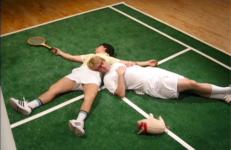
Putting the Balls Away, 2008
Putting the Balls Away is a reenactment of the historic September 21, 1973, tennis match between Billie Jean King and Bobby Riggs, created for broadcast on the 35th anniversary of the original event. The Battle of the Sexes was the most-watched live sporting event at that time, and pitted chauvinist against feminist, when women tennis players demanded equal pay to that of their male counterparts. Both players are performed by Mateik, whose work wages strategic operations to overthrow institutions of compulsory gender. After each game the competitors "switch sides".
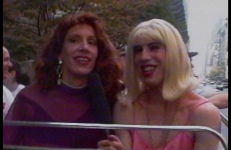
In Queens on the Media Scene, East Village drag queen Linda Simpson (of My Comrade zine) joins Glennda to discuss the explosion of drag in the mainstream media, and the pair interview passers-by on the streets of Midtown Manhattan. They discuss the rising acceptance of drag in the mainstream, in part due to the media presence of RuPaul; the potential taming of drag or its normalization; and an ambition to preserve the more taboo aspects of drag expression in the face of increasing popularization.
Queer Teen Romance, 2008
Budlong Memorial Middle School is heating up. Queer Teen Romance is a charmingly perverse homage to the after-school special that tackles bullying in a hormone-fueled flurry of forbidden sexual fantasy. When Bryce, the school bully, picks on outcast Kevin, a group of tough (and brightly accessorized) girls decide to teach Bryce a lesson. But maybe Kevin doesn’t want the pain to stop?
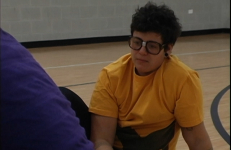
Representing the complex lives of transgender and gender variant musicians in the US and Canada, Riot Acts offers a first-hand perspective of the intersections between gender performance and stage performance. The featured performers are talented, inspiring, sexy, critical and three-dimensional in a manner that purposefully counters mainstream media. Discussions range from songwriting, performance, voice presentation and voice changes, passing/not passing, audience, to the idea of the spectacle, drag, and media representation - the personal is always political.
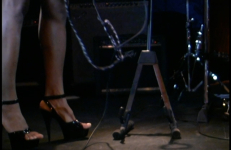
The Roach is Coming, 2018
“The video is an extension of Derrick’s project for Headmaster No. 8. The issue is thematically structured around the Village People, and he was given a cop-themed assignment. More specifically, he was asked to consider the importance of the uniform in relation to authority. At the time, the editors had no idea that Derrick would soon be involved in a late-night altercation with the Chicago PD after leaving a gay bar, or that he would reconnect with a boyhood friend, now a police officer, that he hadn’t seen in many years.
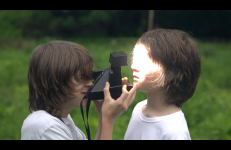
Roam Sweet Home, 1996
Inventing freedom as they roam, videomaker Ellen Spiro and her dog Sam go west in a vintage Airstream trailer in search of elderly dropouts and their dogs who have pulled out of society and into by-the-side-of-the-road trailer communities. Our mutt narrator tells his tale, sharing his thoughts on America’s smells, the foibles of humans, and his view of aging as another journey. In unplanned meetings with gray nomads, psychic misfits, and free spirits, Roam Sweet Home takes the myths of growing older and turns them on their head.

The Robots of Sodom, 2002
"Sodom — for those of you who haven’t been there — is an island about ten miles in length by about two miles in width. There is no depth to it at all. It was built by men as a memorial to God, much the same reasons that I am writing this… to praise and fulfill Him because they had heard He was dead and because His work had apparently come to nothing. The great buildings of Sodom are shaped like tombstones, and the island is populated almost entirely by robots. Man created the robots in his own image, and he created the island in the image of a cemetery.
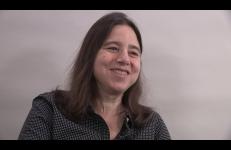
This interview depicts American writer, activist, and AIDS historian Sarah Schulman (b. 1958), discussing becoming a writer, her novels, and her long-term collaboration with filmmaker James Hubbard on projects devoted to gay liberation and AIDS activism. Born in New York to a Holocaust-surviving family, Schulman grew up in an era where women were not considered important.
School Fag, 1998
A fast-talking and fabulous teen recounts his experiences as an out and loud Toronto queer. With catty wit, he recalls his confrontations with straight students at school and his gay prom at a Toronto gay youth community center, told with a flair for drama and punctuated with enactments of his Wonder Woman fantasies. Fung keeps the format simple, giving voice to his subject.
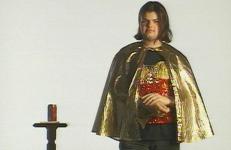
In this episode of The Brenda and Glennda Show, Brenda and Glennda lead a group of drag queens on a trip to Donald Trump’s Taj Mahal Hotel & Casino in Atlantic City. Intended to be a drag queen gambling getaway and a public stage for drag visibilty, the trip turns into a moment of protest and reflection incited by homophobic discrimination. The group is kicked out of the gambling area for supposedly wearing excessive makeup and inapprorpiate, flashy attire — somehow unlike and worse than that of the casino's showgirls and other heavily powdered female patrons.
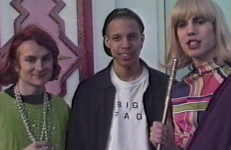
Sex Bowl, 1994
All forms of human sport become sites for sexual play and celebratory eroticism.
“The tape’s images are quick, suggestive, and sexy: fingers moving into bowling balls, shoe-smelling and toe-sucking, a dog wearing chain jewelry, fish being wrapped at the market, young naked couples having sex.... Edited like a music video, the image track is a constant flow of fetishes that lure us into the promiscuous pace of girls who keep lists of their sexual encounters.”
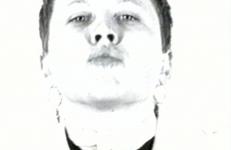
Sex Fish, 1993
An erotic lesbian video involving swimming upstream, female power, and fish love. Made as a collaboration under the name E.T. (Ela Troyano) Baby (Jane Castle) Maniac (Cheang).
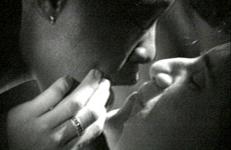
Shave and a Haircut, 2006
A pro-domme gives her friend a freshly shaved head. In return she gets a buzz cut. A client gets to be a (bound) fly on the wall.
This title is also available on Chicago Sex Change: 2002-2008, A collection of Minax's early videos that together create a punk-documentary tapestry of young queer life in Chicago in the early 2000s.
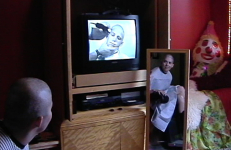
Shifting Positions, 1999
Shifting Positions is a semi-autobiographical/fictional trilogy exploring becoming queer later in life, my father's dementia, and our mid- and end-of-life crises. The selling of our family home of forty years prompted the making of the first section, entitled 'Last Home', which investigates the ways memories and spirits inhabit a house. In the remaining two sections— 'Napping' and 'Behavior Of Fascination'—the relationship between father and daugther is looked at through 'home movies' and documented intimate moments of private life. —Kathy High