


Expedition/Travel

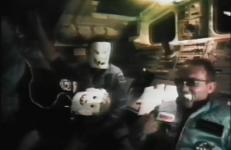
Space Ghost compares the experiences of astronauts and prisoners, using popular depictions of space travel to illustrate the physical and existential aspects of incarceration: sensory deprivation, the perception of time as chaotic and indistinguishable, the displacement of losing face-to-face contact, and the sense of existing in a different but parallel universe with family and loved ones.

Physical comparisons such as the close living quarters, the intensity of the immediate environment, and sensory deprivation, soon give way to psychological ones: the isolation, the changing sense of time, and the experience of earth as distant, inaccessible, and desirable. The analogy extends to media representations that hold astronauts and prisoners in an inverse relationship: the super citizen vs. the super-predator. Astronauts, ceaselessly publicized, are frozen in time and memory whereas prisoners, anonymous and ignored, age without being remembered.
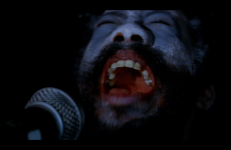
The close collaboration between internationally celebrated artist-filmmakers Ben Rivers (Two Years at Sea) and Ben Russell (Let Each One Go Where He May) has yielded an intriguing ethno-trance aesthetic that finds its stunning summa in their much anticipated co-directed feature A Spell to Ward Off the Darkness. An immersive, at times mesmerizing experience, Spell follows a nameless protagonist — played with Bressonian restraint by musician Robert A.A.

The close collaboration between internationally celebrated artist-filmmakers Ben Rivers (Two Years at Sea) and Ben Russell (Let Each One Go Where He May) has yielded an intriguing ethno-trance aesthetic that finds its stunning summa in their much anticipated co-directed feature A Spell to Ward Off the Darkness. An immersive, at times mesmerizing experience, Spell follows a nameless protagonist — played with Bressonian restraint by musician Robert A.A.

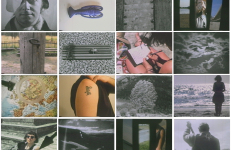
Formally eclectic but heartfelt tribute to the holiday home movie heritage of low gauge formats.

Shot over 3 holidays, and including a dream I had about rescuing a cat from Norway, Stay … is my attempt to pay homage to 8mm’s home movie heritage. It’s pre-digital, so originally cut and shown as sticky tape spliced celluloid. Though rough hewn it’s a film that I still maintain a great fondness for.

p.s. The Wales section is shot on Single 8.

They say there are only two stories in the world: man goes on a journey, and stranger comes to town.

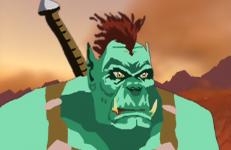
Six people are interviewed anonymously about their experiences coming into the U.S. Each then designs a video game avatar who tells their story by proxy. Goss focuses on the questions and examinations used to establish identity at the border, and how these processes in turn affect one's own sense of self and view of the world.

suicide, 2003

suicide is 70 packed minutes of a fictional filmmaker's crazed ruminations on travel, family history, death and sex as she traverses a world of malls, airports and train stations, chronicling her fiercely hopeful search for a reason to continue living.

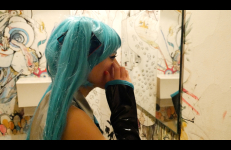
Hatsune Miku is a co-creation platform, personified by a cute and oddly seductive animated character. Fans bring her to life by creating content that she “delivers”. Her entire persona: lyrics, music and animation – is fan created, and that's her charm. Cosplaying Hatsune Miku, Ann Oren goes to Tokyo for a performative journey among these fans and explores the Miku phenomenon as an expression of collective fantasy. The habits of Miku's fans is a familiar exaggeration of our social media habits, that flood us with crowd creativity.

A fragmented, experimental biography of the 19th-century poet and writer Isabelle Eberhardt, whose brief, unusual life ended abruptly in a flash flood in the desert.

A personal essay about connection and disconnection, in and through different realities.

This Is Not Beirut is a personal project that examines the use and production of images and representations of Lebanon and Beirut, both in the West and in Lebanon itself. It also records Salloum’s interactions and experiences while working in Lebanon, focusing on this representational process by a Westernized, foreign-born Lebanese mediator with cultural connections to and baggage from both the West and Lebanon.

As the camera looks out through a barred window and the clock strikes four in a Swiss city, the death of Yasser Arafat provides the starting point for a journey back in time.


Throwing Stones is the third episode in the Hotel Diaries series, a collection of video recordings made in the world’s hotel rooms, which relate personal experiences and reflections to contemporary conflicts in the Middle East.

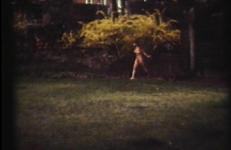
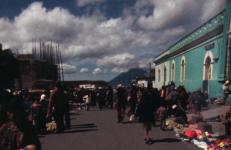
This is a later reworking of original video documenting the goings-on of the village, Tlocalula, Mexico in 1973.

This is a later reworking of original video documenting the goings-on of the village, Tlocalula, Mexico in 1973. Uses footage from Oaxaca 2004 in the background.

Trip, 1999

Trip is inspired by the main oeuvre of architect Raine Karp--the concert hall designed for the city of Tallinn between 1975-1980. Considered the most important building realized in Estonia, Linnahall is a time capsule preserving the utopian ideas of centralized power and of egalitarian modernism, and an example of how architecture can stir public emotions in our times of corporate dominance.

Trip, 1999

Trip is inspired by the main oeuvre of architect Raine Karp--the concert hall designed for the city of Tallinn between 1975-1980. Considered the most important building realized in Estonia, Linnahall is a time capsule preserving the utopian ideas of centralized power and of egalitarian modernism, and an example of how architecture can stir public emotions in our times of corporate dominance.

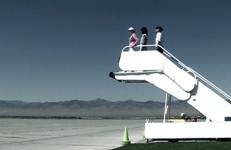
They just flew in from New York, and boy, are their arms tired... Out in the Nevada desert, against the windblown backdrop of Air Force bomber training sites, artists Hajoe Moderegger and Franziska Lamprecht — better known as eteam — gathered testimonials of stranded passengers, crew members, and local residents to recall an episode in the lost annals of American aviation: the 2006 "unscheduled layover" at International Airport Montello (IAM). Truth in Transit reaches beyond simple documentation.

Turistas, 2002

Turistas deals with the letdown of a world that is pre-mediated and post-digested—a video travelling guide that updates the 19th century artist's Grand Tour and downgrades it to 21st century not-so-Grand status.

—Maria-Christina Villasenor, Associate Curator of Film and Media Arts, Guggenheim Museum

A hug/punch eulogy for all things impossible now. Vague Images is a sketch book of images and sounds from the year wrapped around a trip out to Loomis, South Dakota to find the abandoned farm where my grandfather grew up. At the same time the film is a travelogue of my frustrations and understandings of gay sexuality. The two are connected.

A cross-generational binding of three filmmakers seeking alternative possibilities to the power structures they are inherently part of. Each woman extends her reach to a subject she is outside of. Vever grew out of the abandoned film projects of Maya Deren and Barbara Hammer. Shot at the furthest point of a motorcycle trip Hammer took to Guatemala in 1975, and laced through with Deren’s reflections of failure, encounter and initiation in 1950s Haiti.

A vever is a symbolic drawing used in Haitian Voodoo to invoke Loa, or god.

We will live to see these things... is a documentary video in five parts about competing visions of an uncertain future. Shot in 2005/06 in Damascus, Syria, the work combines fiction and non-fiction. Each section of the piece--the chronicle of a building in downtown Damascus, an interview with a dissident intellectual, documentation of an equestrian event, the fever dream of a U.S.

We will live to see these things... is a documentary video in five parts about competing visions of an uncertain future. Shot in 2005/06 in Damascus, Syria, the work combines fiction and non-fiction. Each section of the piece--the chronicle of a building in downtown Damascus, an interview with a dissident intellectual, documentation of an equestrian event, the fever dream of a U.S.

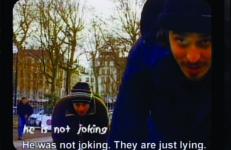
The filmmaker and his friend, both Lebanese, meet two Israelis their own age in Paris, and spend some playful time with them. While they play a game, they refer constantly and humorously to the war and to the frozen status quo between the two countries.

This title is only available on Radical Closure.

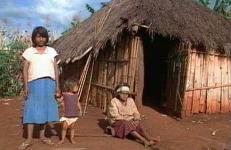
Indians In Brazil is an educational series for Brazilian public schools that invites students to experience cultural diversity. Four teenagers are invited to discover a new world and participate in Indian daily life in two different communities. They show their emotions, curiosity and fears, and are surprised by their new friends. Part Two of the series, When God Visits the Village, sees the teenagers invited to visit the Kaiowá people in South Mato Grosso. Expecting something similar to the Krahô village they had earlier visited, they are at first shocked.

Indians In Brazil is an educational series for Brazilian public schools that invites students to experience cultural diversity. Four teenagers are invited to discover a new world and participate in Indian daily life in two different communities. They show their emotions, curiosity and fears, and are surprised by their new friends. Part Two of the series, When God Visits the Village, sees the teenagers invited to visit the Kaiowá people in South Mato Grosso. Expecting something similar to the Krahô village they had earlier visited, they are at first shocked.

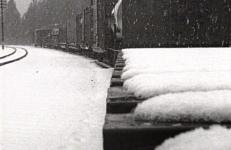
The secret history of hobo and railworker graffiti. Shot on freight trips across the western US over a period of 16 years, Who is Bozo Texino? chronicles the search for the source of a ubiquitous rail graffiti--a simple sketch of a character with an infinity-shaped hat and the scrawled moniker, "Bozo Texino"--a drawing seen on railcars for over 80 years.