


Part of super 8mm films series.
Nature
Storm and Stress, 1986
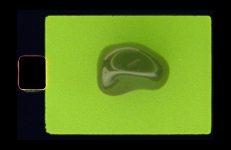
Displays of violent weather conditions, electrical storms, tornados, floods, fires and other eruptions are contrasted and equated with equally awe-inspiring images of technology that harnesses or mimics nature. Pitting the spectre of nature against technology in time-lapsed images, this thoughtful and stirring tape paints a portrait of the encounter between the man-made and the natural—between man’s controlling power and that which eludes man’s control.
Subatlantic, 2015
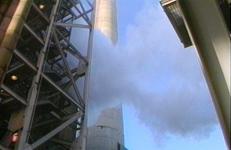
Appealing concurrently in this video essay to various meanings of the term “Subatlantic” — a climatic phase beginning 2,500 years ago, as well as the submerged regions of the Atlantic — Biemann immerses her camera deep in oceanic waters to ponder upon the entanglements of geological time with that of human history.
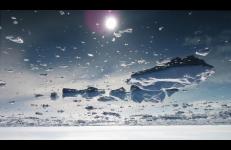
Suite Lunar, 2020
This suite is a set of circular and fragmented compositions, in which a rhythmic and haunted dance hides an eroded lunar landscape. The microscopic rubble of our contemporary civilization. Part of the Lunar Films series.
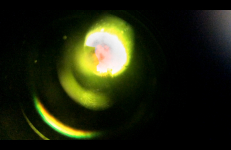
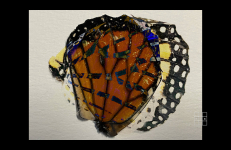
The Magic Hedge, 2016
The Magic Hedge explores a bird sanctuary located on a former Cold War Nike missile site on the Northside of Chicago. Left to wander and observe, the viewer becomes aware of the park's open secret: men looking for fleeting sexual contacts within the trees and shrubberies. The video highlights the many contradictions of a site historically devoted to military surveillance and now designed to preserve and control the "wildlife".
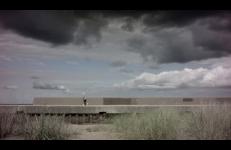
This is a Sign, 2025
This is a Sign (by Bob Snyder and Sara Livingston) is a contemporary daydream, with the kinds of conceptual twists and turns that daydreams often have. Natural forces in motion, a slow dance with robotic arms, a historical procession of masks, a feeling of unchecked growth, all punctuated with clouds. As with all Illustrated Music productions, "the music is the story".
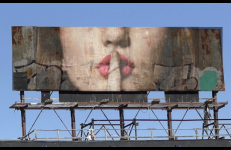
Tonalli, 2021
“Drawing on the ancient Nahuatl concept of the animating soul or life force, Tonalli engages the ritualistic powers of the cinema, summoning fire, flowers, and many moons into a frenetic and mesmerizing in-camera collage. Here, amid thickly swirling images and textured abstractions, the gods of creation and fertility manifest, dissolving into iridescent colors and dense, corporeal rhythms.” NYFF59
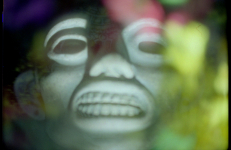
Tortilla, 2020
Tortillas are an ancestral and sacred food, our transmuted corn. The circular nourishment that represents the luminous and colorful side of the moon on which our life is nourished. This is the cosmic dance of the colorful Tortilla with the hyperkinetic fire that sustain our bodies and souls. Part of the Lunar Films series.
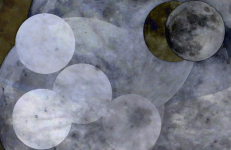
Tramuntana, 2025
In a remote area of northern Spain, the wind has a name: Tramuntana. Tramuntana takes what it wants—clothes, trees, boats, and the people of the landscape who live with the endless threat of being carried away by its force. This film is a lyrical portrait of this furious wind, woven from the stories passed down by local villagers.
Sound mix and design by Julian Flavin, Color by Ye Xi, Graphic Design by Studio Lieneman, With the support of "la Caixa" Foundation
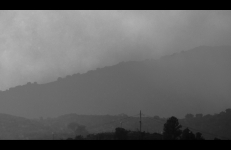
Transplanting, 2024
Transplanting is a video performance film looking at the connection between the movement of plants and bodies within the contemporary post-colonial context. Set in Lisbon’s botanical garden and urban gardens built by African migrant communities, the film reflects on colonial exploitation and displacement. It begins with the botanic garden, representing the forced transplantation of plants and diasporic bodies due to colonialism.
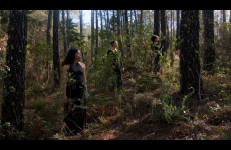
Trento Symphonia, 2014
At sunset a large orchestra, a choir and a group of young people position themselves against the backdrop of a mountain landscape. The musicians play the first section of Mahler's 8th Symphony, moving in precise choreography. Then, almost unnoticed, groups of them start disappearing in the dying light. Soon the landscape and the sound similarly dissolve into twilight.
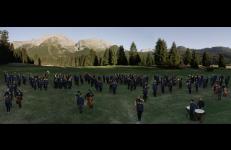
Trypps #7 (Badlands), 2010
“Trypps #7 (Badlands) charts, through an intimate long-take, a young woman's LSD trip in the Badlands National Park, before descending into a psychedelic, formal abstraction of the expansive desert landscape. Concerned with notions of the romantic sublime, phenomenological experience, and secular spiritualism, the work continues Russell's unique investigation into the possibilities of cinema as a site for transcendence.”
-- Michael Green, Museum of Contemporary Art, Chicago
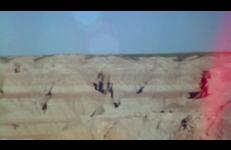
Twelve Scenes, 2010
Originating from personal affection toward Seoul, Twelve Scenes portrays the spectacles in daily life by juxtaposing urban space in a twelve month sequence. As the individual particles in a kaleidoscope create splendid illusions by being reflected on a mirror, Twelve Scenes shows our individual life, seemingly separated by time and space, actually composes the scenery in the kaleidoscope of Seoul. Twelve Scenes represents a 'moment for self-reflection' or 'small, but precious enlightenment on life'.
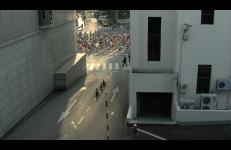
Under the Volcano, 2018
A cinematic place where the mountains crash into each other in a field of magma and fire. A landscape of events.
Untitled (eclipse), 2019
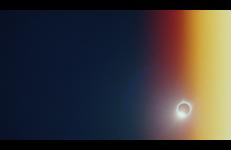
A silent 16mm film shot in Nebraska during the total solar eclipse in 2017. The work was shot on film to capture this light-based phenomenon on a light reactive medium, as opposed to on digital video. Meditating on the metaphysical, in the work we observe the slow alignment of the moon eclipsing the sun, super-imposed onto the open landscape where it was shot. Wind, insects and plants all become active receptors for this phenomenological shift from mid-day to mid-night, as the sun transforms from a primary source of life into a fugitive void.
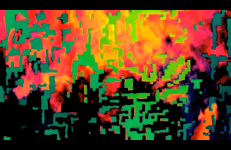
Untitled for Technically Sweet was originally inspired by the Antonioni script of the same title for an exhibition curated by Yvette Brackman and Maria Finn and shown at Participant Inc. NYC, and Overgaden-Institute for Contemporary Art, Copenhagen. Under the subconscious yet ever-present glow of real and psychic catastrophic events lies something even more terrifying—the natural world and its utter indifference. This two-channel video installation pits catalog-perfect natural settings with the potential for environmental devastation.
Vermont Landscape, 2004
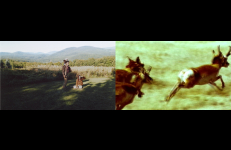
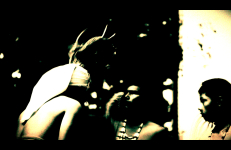
Both Vermont Landscape and Pond Life followed two opera collaborations with composer Steve Reich. The operas were a new genre called a Theater of Ideas, which said a great deal about the world cultures in which we all live. In contrast, these two small works are quiet, with no words.
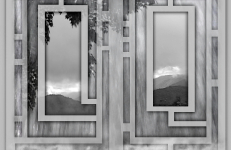
Water and wind are friction forces that continuously erode and shape landscapes, and the record of their effects is left behind on Earth’s terrain. As Laurie travels to the Monahans Sandhills in West Texas, a tornado threatens and leaves her vulnerable in a place with limited refuge, but she finds a modest motel made of cinderblock to wait out the storm. Desert images are contrasted with images of rain falling on roofs adjacent to the Electron Movers studio at 128 N.
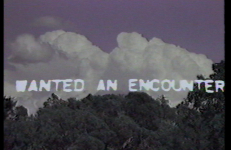
The Winged Stone, 2023
Through the floating garden, into the mountain of signs and chants, arise the path of the winged stone. A stone that used to be a fossil.
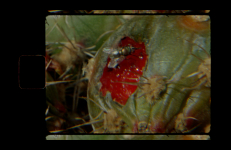
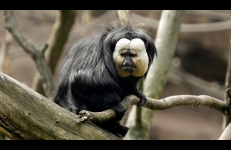
Audio-visual recordings of zoo-animals are woven into a fine web of actions and reactions, that finally spiral into a collective animalistic concert. Relating the different animals to each other through montage, fictional relations amongst them is created; a society of animals. The film thus comments on human communities, who created zoos as mirror images. There is an otherness there, and at the same time a disturbing proximity, which we’d like to dismiss.
Written, directed and edited by: Ann Oren
Sound: Robert Hefter