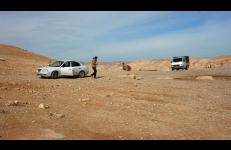



1.1 Acre Flat Screen is a 45-minute video about a year-long effort to improve a lot of 1.1 acres of desert land in Utah, which we purchased on September 4th 2002 on eBay. The video starts with ways of finding a lot in the desert, using satellite images, topographical maps, a compass and string. It displays ideas and plans on how to improve the land’s value and documents our preparations to face the unforgiving desert.
Expedition/Travel
2 Channel Land, 2022
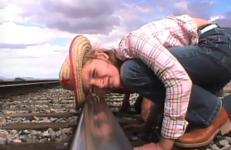
2 Channel Land is a north-western docu-fiction film exploring the history of analogue signals spilling across the borders of Ireland and Britain. Guided by a mysterious threshold deity, we take a journey through Ireland's borderlands in search of community.
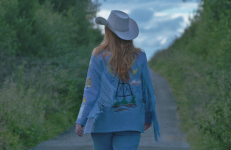
"In this antiqued period piece, the morbid star, Lupe Velez, travels to Hollywood, Guanajuato, and Barcelona, seeking her own death."
—Berkeley Art Museum, Pacific Film Archives, April 1998
This title is also available on Half-Lies: The Videoworks of Ximena Cuevas.
Actions in Action, 1997
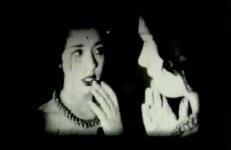
This first work in the HalfLifers' Action Series plunges into a world of frantic heroes trapped in a continual crisis of dissolution and reification. An ordinary domestic setting is recast as a psychoactive landscape in which the concept of function becomes situational and fluid. Only through the strategic application of organic and inorganic “devices” can this zone be successfully navigated and the mission be saved.
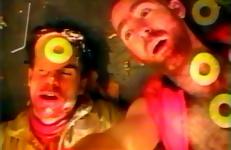
Adrift, 2009
Inspired by Tennessee Williams’ The Roman Spring of Mrs. Stone, this meditation on the quotidian gestures of strangers constitute a counter-shot from the Roman landscape through which a fictional character wanders, adrift. After meeting a young girl in the Campo di Fiori market, a woman who has come to Rome to die, journeys through its many fountains, taunted by visions of lost innocence. Staged on locations from the Roman films of Pier Paolo Pasolini. Music by Ben Kamen.
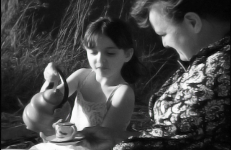
In 1972 Eric Siegel, an early pioneer of video art, set out on an extreme adventure driving from Europe six thousand miles overland to India. He was one of the first people to use the revolutionary new technology from Sony Corporation, the Portapak. This was the first small portable video camera/recorder combo that was the predecessor of today’s camcorders. Together with his friend Anthony they documented the trip. This video is the portion of the trip that took them through Afghanistan, one of the most exotic places along the way.
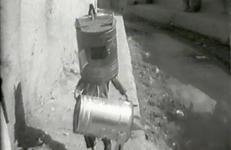
For four years in the 1860’s, half of the United States was held hostage by an unrecognized white supremacist republic. Shot on 16mm in national military parks, swamps, forests and the suburban sprawl across the former battlefields, the film follows General Grant’s path liberating the southern United States. Part travelogue, part essay film, part landscape documentary, it moves from the Texas-Louisiana border to a prison island off the coast of New England.
A psychedelic portrait of the founding theorist of Christianity.
The story of Paul the Apostle’s life, ideology, and influence is told by piecing together 20th century 16mm and cassette propaganda, board games, animation, reenactments, Roman Empire doom metal and covers of Catholic liturgical music. The gentle Paul themes of flute, acoustic guitar, and mellotron contrast with the Demonic Roman Empire themes of electric guitar, drums and synth. Performance artist Linda Mary Montano and Usama Alshaibi portray Paul on his journey.
Film and video maker Ken Kobland returns to the urban landscapes he filmed 20 years previously, such as the New York subway and the S-Bahn in Berlin. We leave, we travel, but it’s always the same images that we are drawn to. A moving road movie about eternal departure and arrival.
Aroma of Enchantment, 1992
Aroma of Enchantment is a video essay investigating the fascination Japanese teenagers have for the America of the 1950s and '60s, sporting bobby socks and hair soaked with Brylcreem. Weaving together historical anecdotes about General Douglas MacArthur and his own feelings of alienation in the midst of Japanese culture, Lord focuses on stories told by collectors of American memorabilia in Japan and advocates of Americanization.
B & B, 2005
UK, November 26th 2005
The perception of an Anglo-American hotel room is coloured by new revelations about 'The War on Terror' and 'The Special Relationship' that exists between Britain and the USA.
B & B is the fourth episode in the Hotel Diaries series, a collection of video recordings made in the world’s hotel rooms, which relate personal experiences and reflections to contemporary conflicts in the Middle East.
In 2012, eteam visits Mars and Moon Townships in Pennsylvania. Using a documentary approach, they position themselves as cultural anthropologists who view the towns as if they were simulated environments on Earth, training grounds for eventual living on the planet Mars and Earth's satellite, the Moon.
eteam's book-form reinterpretation, Buzz Cut, will be included with every institutional purchase at no additional charge.

BAGHDAD IN NO PARTICULAR ORDER is an ambient video essay of life in Baghdad before the invasion and occupation. Men dance, women draw and sufis sing as they await the coming of another war. In seven languages (Arabic, Chinese, English, French, German, Italian and Spanish).
Notes, gifts, promises, paintings, trash, and other ephemera from the city which is now hardly a city. What if Walter Benjamin didn’t kill himself, learned html, bought a camera, and thought himself useful enough to work in an impending war zone?
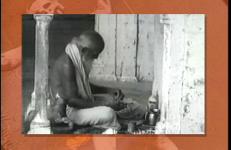
Benares, 1998
"In 1997 I went to Benares, India to study the Hindu practice of burning the bodies of their dead on the Ganges ghats. My purpose was:
1. To become more at ease with death, a hidden western phenomenon;
2. To de-fuse fear around seeing death;
3. To watch how Hindu elders congregate in Benares to die since dying here in this holy city guarantees "moksha", no rebirth. Visiting temples and ashrams for the elderly allowed me to observe how they use their time and prepare for their eventual passing.
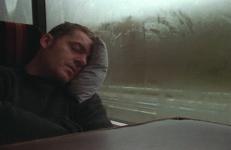
Moving towards an unknown destination, a group of anonymous passengers float through an unidentified landscape. Built from Cohen’s archive documenting his travels, the film can be seen as a curious parable. The film's subheading refers to the Old Testament, Daniel chapter 11, verse 40: “And at the time of the end shall the king of the south push at him: and the king of the north shall come against him like a whirlwind with chariots, and with horsemen, and with many ships; and he shall enter into the countries, and shall overflow and pass over.”
Blood Orange Sky, 1999
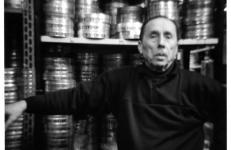
A portrait of Catania, Sicily. Includes the ocean at 5 a.m., the fish market, the distributor of pornographic films, the woodworker, the elephant statue, housing projects, and a young girl in an orange sweater. Catania is a large and remarkable city without many tourists or tourist attractions. Its people live in the shadow of Mt. Aetna, an active volcano.
Mark Linkous of the band Sparklehorse composed original soundtrack for the project, which also contains music by local Catania musicians.
Coal Train in 2/4 Time, 1996
Filled to capacity, each car of a 157 car train sounds a percussive note in this homage to John Coltrane. And not one coal train, but two.
This title is also available on Sympathetic Vibrations: The Videoworks of Paul Kos.
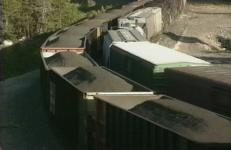
Color-Blind, 2019
A synaesthetic S16mm portrait made between French Polynesia and the French province of Bretagne, Color-Blind recruits the restless ghost of Paul Gauguin as an uneasy spirit guide in excavating the colonial legacy of a decidedly syncretic post-colonial present.
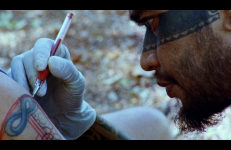
Come Closer, 2008
A poetic meditation on distance, Come Closer is a short and peripatetic film, casting an affective web between the locations of Lisbon, San Francisco and Brazil. Focusing on Brazilian-Algerian filmmaker Karim Aïnouz, musician Derrick Green –– the filmmaker’s brother and lead singer of Brazilian band Sepultura –– and her own work produced in Lisbon since 1992, Come Closer can be thought as a meditation on friendship and saudade.
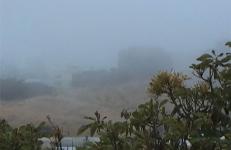
Contained Mobility, 2004
Upon entering the harbor, the voyager leaves the exceptional condition of the boundless sea--this traversable space of maritime immensity--to come ashore in an offshore place, in a container world that only tolerates the trans-local state of not being of this place--nor of any other really--but of existing in a condition of permanent not-belonging, of juridical non-existence. He comes to signify the itinerant body, bound to string along a chain of territories, never reaching a final destination.
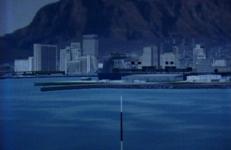
Cooperation of Parts, 1987
The fragment contains within it an implied reference to something that was once whole. It suggests damage and violence, time and distance. These qualities I found were integral to my own constitution, and it was with the making of Cooperation Of Parts that this became clear.
“Misfortune makes and breaks you.” I have the misfortune of a history of disruptions, and the fortune of having that history to work with.
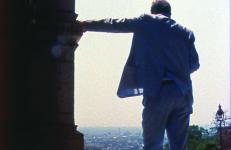
Coréen 2495, 2005
In 1993 President Mitterrand visited Korea. On this visit Mitterrand promised that he would restore to Korea the 297 volumes of the Oe-Kyujanggak Archives (the royal protocols of Chosun Dynasty in Korea), pillaged by the French army in 1866 and now part of the collections in the Bibliothèque Nationale de France (National Library of France). As a sign of intent, he assured the interested parties that a two-volume book, the Hyikyungwon-Wonsodogam-Uigwe, would be immediately returned.
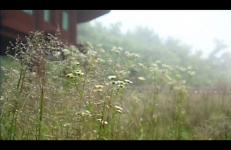
Crosswinds, 2016
Crosswinds is part of the fieldtrip series. By definition a crosswind is any wind that has a perpendicular component to the line or direction of travel. The title, Crosswinds, acts as a symbol of crossed pollination of cultures and identities. Crosswinds is a work that conceals many worlds, the world of the past and of the present – a world of memories of a colonial past which is a ruin that constructs the identity of a postcolonial present. It is a crossed geography that plays with the dichotomy of being in between different locations.
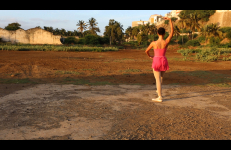
Deliver, 2008
Like a generation of viewers, I was profoundly affected by Deliverance. But I have always been troubled by the hegemonic structures of gender proposed by Boorman and Dickey. Hence, my version is played by women: myself, Peggy Ahwesh, Jackie Goss, Su Friedrich, and Meredith Root, all experimental filmmakers who work as academics. While faithful to our respective male characters, we also play ourselves.
Desert Station, 2011
In the midst of the 2011 revolution in Cairo, a few beduins listen to their car's radio near Jericho, a place which looks like the end of the world. Within moments this desolated landscape transfers into a busy tourist attraction as a bus full of Polish Pilgrims enter the landscape.
Note: This title is intended by the artist to be viewed in High Definition. While DVD format is available to enable accessibility, VDB recommends presentation on Blu-ray or HD digital file.